The Cost of Delay: How AI Tools Are Amplifying Developer Productivity by 35–45% in 2026
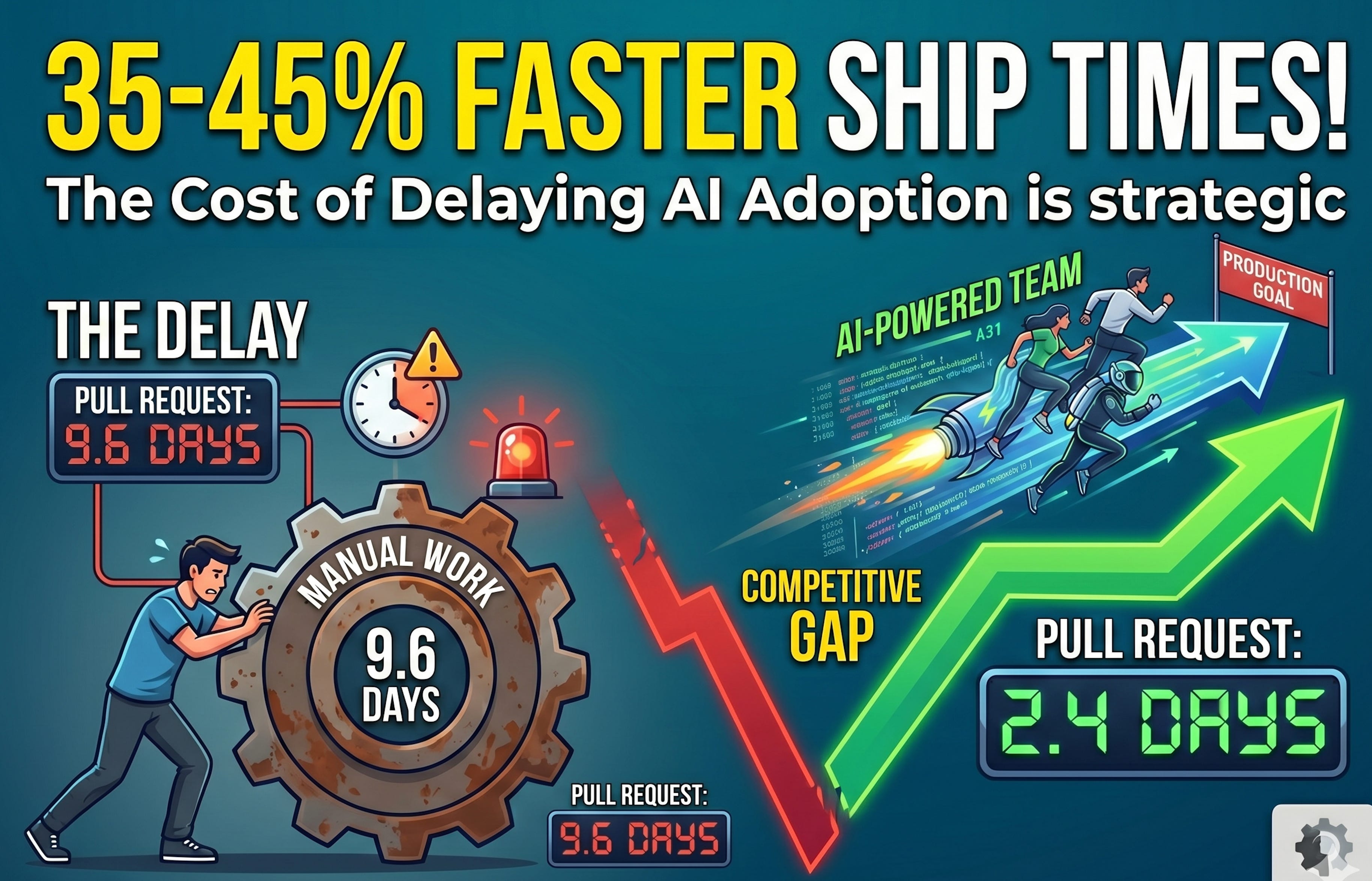
The companies that adopted AI coding tools in 2024 are now shipping software 35–45% faster than the ones that didn’t. That isn’t a vendor pitch. It’s the consistent finding across multiple research studies, including a controlled 4,800-developer cohort run by GitHub and Accenture, in which engineers using Copilot completed tasks 55% faster than those without it.
If you lead a UK tech team and you’re still treating AI tools as a “nice to have” or a “we’ll figure it out next quarter” project, you’re already losing ground. Pull request times have dropped from 9.6 days to 2.4 days in teams that have integrated AI coding assistant workflows fully. Developer satisfaction is up. Cycle time is down.
But there’s a complication. Microsoft Research shows it takes around 11 weeks for developers to fully realise the productivity gains. Most teams that try AI tools and quit too early walk away with the wrong conclusion. AI developer productivity is real and significant — it just isn’t instant.
Here’s what the data shows, why the cost of delay AI adoption has become a strategic concern, and how to build a team that can actually take advantage of it.
What the Productivity Numbers Actually Show
Let’s start with the verified data, not the marketing.
The most-cited study, published by Peng et al. in 2023, found that developers using GitHub Copilot to build a JavaScript HTTP server completed the task 55.8% faster than the control group. The 95% confidence interval was 21–89%, which means the effect is statistically robust even if it varies by individual.
GitHub’s own research, conducted with Accenture across 4,800 developers, found Copilot-using teams shipped 84% more successful builds and saw pull request time fall from 9.6 days to 2.4 days. Developers retained 88% of accepted code in final submissions, suggesting AI suggestions are production-ready in most cases rather than throwaway drafts.
Survey data backs this up. Industry research suggests AI productivity gains of 25–39% are typical when AI tools are used regularly. The headline 55% comes from controlled tasks; real-world deployments tend to land at the 30–40% range, which is still transformative.
The other notable shift: AI coding tools now generate around 46% of code written by their users, rising to 61% in Java codebases. This isn’t autocomplete. It’s a fundamental change in how software gets written.
How AI Coding Assistants Change Day-to-Day Engineering
The productivity gains break into three patterns.
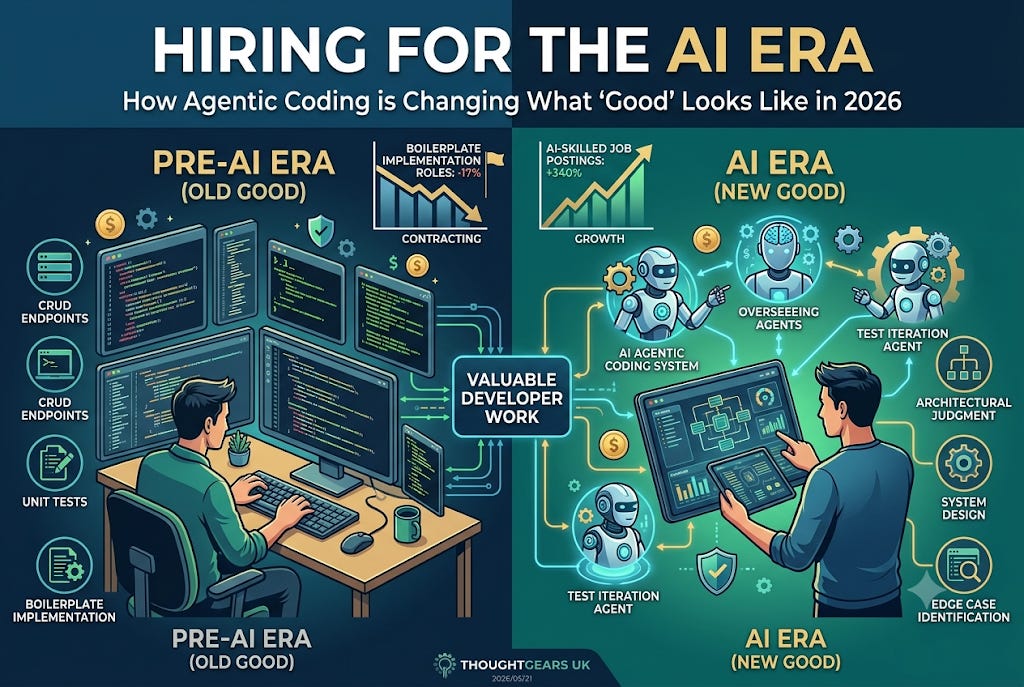
The first is speed on routine work. Boilerplate, test scaffolding, CRUD endpoints, configuration files — anything repetitive — now takes a fraction of the time. Developers report spending 30–60% less time on this kind of work. In team terms, this means more capacity for higher-value problems without expanding headcount.
The second is reduced cognitive load. 87% of developers report using less mental energy on repetitive tasks like boilerplate and syntax. This shows up in lower burnout, higher job satisfaction, and longer flow states. AI development speed isn’t just about output — it’s about how engineers feel during the work.
The third is faster onboarding. New engineers using AI coding tools can navigate unfamiliar codebases more confidently and contribute meaningful code faster. The same pattern holds for engineers learning a new framework or language. GitHub Copilot productivity is most pronounced for junior and mid-level developers working at the edges of their experience.
But the gains aren’t uniform. Complex algorithm work shows more modest 5–10% improvements. Critical security code still benefits from heavy human review — academic studies have found 29.1% of generated Python code can contain security weaknesses if left unreviewed. AI is a productivity tool, not a quality replacement.
Why Delaying AI Adoption Is Now a Strategic Risk
The competitive pressure is real and growing. Microsoft’s Work Trend Index shows that 71% of business leaders now prefer a less-experienced AI-fluent candidate over a more experienced professional without those capabilities. That preference is reshaping the UK tech AI strategy of every serious tech employer.
Three things are happening at once. First, the teams that adopted AI tools 12–18 months ago have moved up the learning curve. Their developers no longer fumble with prompts. Their codebases are structured for AI-assisted work. Their CI pipelines have integrated AI review. The flywheel is turning.
Second, the pricing economics are getting more attractive. Copilot Individual is $10 per user per month. Copilot Business is $19. Even at scale, the cost is trivial compared to the productivity gain. Most enterprises report positive ROI within 3–6 months.
Third, the cost of delay AI adoption is compounding. If your competitor’s developers are 35% more productive than yours, they ship features faster, fix bugs faster, and respond to customer feedback faster. Across a quarter, that’s a meaningful product gap. Across a year, it’s a category position.
The companies that lead on CTO competitive advantage AI in 2026 aren’t waiting. They’re building AI-fluent engineering cultures now and they’ll widen the gap from here.
Building a Tech Team That Can Use AI Properly
The hard part isn’t licensing the tools. It’s building the team and culture that uses them well.
Start with hiring. AI hiring strategy in 2026 means actively screening for AI fluency at interview stage. That doesn’t mean asking candidates to recite prompt engineering tricks. It means giving them a realistic coding task and observing how they use available tools, including AI assistants. The most effective developers in 2026 know when to use AI, when to override it, and when to ignore it.
For existing team members, invest in structured ramp-up. Microsoft’s data showing it takes 11 weeks to realise full productivity gains is a warning. Don’t roll out tools and expect immediate results. Run pair programming sessions. Share prompt patterns. Build internal libraries of effective prompts for common tasks. The teams that do this systematically pull ahead.
The other major investment is in specialist AI developers — engineers with deep AI/ML expertise who can guide architecture decisions for AI-integrated products. These professionals are scarce in the UK, which is why many CTOs are now sourcing them through global tech recruitment partners.
Don’t forget governance. AI-generated code requires the same review discipline as human code, and arguably more for security-sensitive work. Mandatory automated vulnerability scanning and clear standards for AI use should be in place before you scale adoption.
Measuring AI Productivity Without Fooling Yourself
Here’s where many leaders go wrong: they measure activity, not outcome.
The right way to measure AI engineering productivity is using DORA metrics: deployment frequency, lead time for changes, change failure rate, and mean time to recovery. These show whether your team is actually shipping more, faster, with fewer regressions. Activity metrics — lines of code, suggestions accepted, prompt count — are vanity metrics at best and misleading at worst.
The other measure that matters is talent retention. AI tools should reduce developer burnout and increase job satisfaction. If your engagement scores drop after AI rollout, something’s wrong with how you’ve deployed the tools, not the tools themselves.
Watch out for false signals. One academic study found developers believed they worked 20% faster with AI even when they were actually slower in controlled tests. The perception of speed isn’t the same as actual speed. Always tie measurement back to shipped output.
For CTO AI strategy, the question isn’t “are we using AI?” Almost everyone is. The right question is: are we measurably faster than we were 12 months ago? If you can’t answer that with data, your AI rollout isn’t working as it should.
The data is no longer ambiguous. AI coding tools deliver 30–50% productivity gains for developers who use them well, with positive ROI typically inside 3–6 months. The leaders who adopted in 2024 are now compounding that advantage. The ones still debating face a widening competitive gap.
The cost of delay isn’t theoretical. It’s measured in shipped features, customer responsiveness, and the ability to attract AI-fluent engineers in a tight talent market. UK tech teams that move now — with the right hiring strategy, structured rollouts, and proper measurement — will set the pace in their categories.
If your roadmap depends on shipping more software with the same team, AI tooling is no longer optional. The harder question is who you hire, how you train them, and how you build a culture that uses these tools effectively.
Ready to scale your tech team? Get in touch with ThoughtGears — we’d love to hear about your project.
FAQs
How much faster are developers really with AI tools?
Controlled studies show 55% faster task completion with GitHub Copilot. Real-world deployments typically deliver 25–40% productivity gains depending on the type of work.
Which AI coding tools are most worth adopting?
GitHub Copilot remains the most widely adopted. Cursor, Amazon Q Developer, and Anthropic’s Claude-powered tools are also strong choices.
How long does it take to see AI productivity gains?
Microsoft Research shows it takes around 11 weeks for developers to fully realise productivity gains.
Are AI-generated code suggestions secure?
Not always. Studies have found that around 29% of generated Python code can contain security weaknesses if left unreviewed.
Should I hire developers based on their AI fluency?
Yes. Microsoft’s research shows 71% of business leaders now prefer a less-experienced AI-fluent candidate over a more experienced one without those skills.
What’s the ROI on AI coding tools?
Most enterprises report positive ROI within 3–6 months.
Will AI tools replace developers?
No. AI tools are creating more developer work, not less.
How do I measure AI productivity gains in my team?
Use DORA metrics: deployment frequency, lead time for changes, change failure rate, and mean time to recovery.
What’s the biggest mistake teams make with AI tool rollout?
Rolling out tools without structured training and giving up too early.
How do I find AI-fluent engineers if I can’t compete on UK salaries?
Specialist offshore tech recruitment partners can deliver pre-vetted, AI-fluent engineers from Southeast Asia and Europe at 35–60% lower rates than UK equivalents.
⚠️ Disclaimer
This article is for general information and reflects research available at the time of writing. Productivity statistics vary by team, role, and codebase. AI tooling evolves quickly — verify current pricing and capabilities with vendors before making procurement decisions. ThoughtGears does not provide legal, financial, or compliance advice; always consult qualified professionals for your specific situation.