Skills Shortage Turning Costly: What UK Leaders Need to Know About the £5.5 Trillion Tech Talent Risk

The UK tech talent shortage now costs the economy £4.4 billion a year, and that figure could rise sevenfold by 2030. That isn’t a forecast from a doom-scrolling consultant. It’s the conclusion of researchers at the University of Birmingham, whose 2025 report estimates digital skills shortages could drag £27.6 billion out of the UK economy by the decade’s end and put 380,000 jobs at risk.
Globally, the picture looks even starker. IDC forecasts that 90% of organisations will face IT skills gaps by 2026, draining $5.5 trillion from the world economy. If you lead a UK tech team, you’ve probably already felt this in your hiring pipeline: roles open for months, candidate quality dropping, salary expectations climbing.
The good news is that the cost of skills shortage UK leaders now face has produced an equally clear set of solutions. Companies that act quickly, with the right blend of domestic hiring, skills-based assessment, and global talent partnerships, are closing the gap. Those that wait will pay more, ship slower, and lose ground to faster competitors.
Here’s what the latest data tells us, and what to do about it.
The Real Cost of the UK Tech Talent Shortage
Numbers tell the story most clearly. The University of Birmingham’s City-REDI report puts the cost of skills shortage UK businesses absorbed in 2023 at £4.4 billion. By 2030, without intervention, that number rises to £27.6 billion.
WorldSkills UK puts the digital skills gap even higher, at £63 billion annually in lost GDP, projected to reach £166 billion by 2030. The variation reflects how the gap is measured — narrower digital skills versus broader workforce productivity — but the trend is the same. The UK tech talent shortage is widening, not closing.
What this means for your business is harder to ignore. According to ManpowerGroup’s 2025 Talent Shortage Survey, IT and data skills have been the hardest roles to fill in the UK for five years running. In Q1 2025, 51% of IT firms reported plans to hire — and 75% said they couldn’t find the qualified candidates they needed.
That mismatch shows up on your P&L as longer time-to-hire, project delays, and inflated salaries. Industry data suggests the average time to fill a specialist technical role is now 88 days. For a business running quarterly product cycles, that’s not a hiring delay. It’s a strategic liability.
Where the Skills Are Hardest to Find
Not every tech role is equally affected. The pinch points cluster around four areas: artificial intelligence, machine learning, cybersecurity, and cloud engineering.
The 2024 Morgan McKinley Salary Guide found 76% of UK technology hiring managers describing recruitment as “very” or “quite” competitive, with AI and machine learning roles the toughest to source. Microsoft’s Work Trend Index reports that 71% of business leaders now prefer a less-experienced AI-fluent candidate over a more experienced professional without those capabilities. That preference, multiplied across thousands of hiring managers, has created a genuine AI engineer shortage.
The cybersecurity talent gap is just as severe. As ransomware threats rise and the EU AI Act takes full effect in August 2026, demand for security engineers, compliance specialists, and AI governance experts has surged. Organisations that hesitated to invest in security teams in 2024 are now paying premium rates to catch up.
Specialist software developer shortage in niche frameworks — Rust, Go, advanced Kubernetes, modern data engineering — is the third pressure point. These developers exist, but they’re concentrated in a handful of global hubs and command rates well above UK averages.
Why Traditional Hiring Has Stopped Working
The conventional UK hiring playbook — post a job, screen CVs, interview, hire — was built for a market that no longer exists.
The first problem is timing. With an 88-day average time-to-hire for specialist roles, you’re effectively three months behind your competitors before a new engineer writes their first line of code. Every week you wait, the project shifts, scope drifts, and your business case erodes.
The second problem is the IT skills gap UK companies face on the supply side. The Open University’s 2024 Business Barometer found 62% of UK organisations reporting skills shortages. CBI’s October 2023 Employment Trends Survey reported 38% of UK businesses unable to respond to new opportunities because of labour shortages, with 22% holding back investment as a direct result.
The third problem is cost. When demand outstrips supply, salaries rise. UK senior developer rates have climbed steadily, with rare specialisations in AI/ML now commanding £85+ per hour for contractors. Many scale-up CTOs and UK CTO hiring strategy decisions now revolve around a simple question: how do we get the talent we need without blowing the burn rate?
How Smart Companies Are Closing the Gap
The most successful UK tech leaders are answering that question with a hybrid model — combining a smaller, senior domestic team with strategic offshore partnerships.
This is why the IT staff augmentation UK market has grown so quickly. Verified Market Research projects the global IT staff augmentation market will reach $857.2 billion by 2032, up from $299.3 billion in 2023. The growth reflects a structural shift: leaders are accepting that they can’t fix the talent problem with onshore hiring alone.
Hiring offshore developers from regions like South-East Asia and Eastern Europe gives you access to engineers at 35–60% lower hourly rates than UK equivalents. SE Asia tech talent, in particular, has matured rapidly. Vietnam now produces 57,000 tech graduates a year, and the country’s IT outsourcing market is projected to reach $1.237 billion by 2029.
The other big shift is skills-based hiring. Instead of filtering for a specific degree or job title, leading CTOs are now hiring on demonstrated capability — coding tests, take-home projects, and AI-fluency assessments. This widens the pipeline dramatically and produces stronger hires.
Your Action Plan for the Next 90 Days
If you’re starting from a hiring deficit today, here’s where to focus.
First, audit your open roles. Which absolutely must be UK-based for compliance, security, or client-facing reasons? Which can be offshore or hybrid? Most engineering work falls into the second category.
Second, partner with a specialist offshore recruitment partner who understands UK business standards and can vet engineers for English fluency, time zone overlap, and technical depth. The right partner can cut time-to-hire from 88 days to under 30.
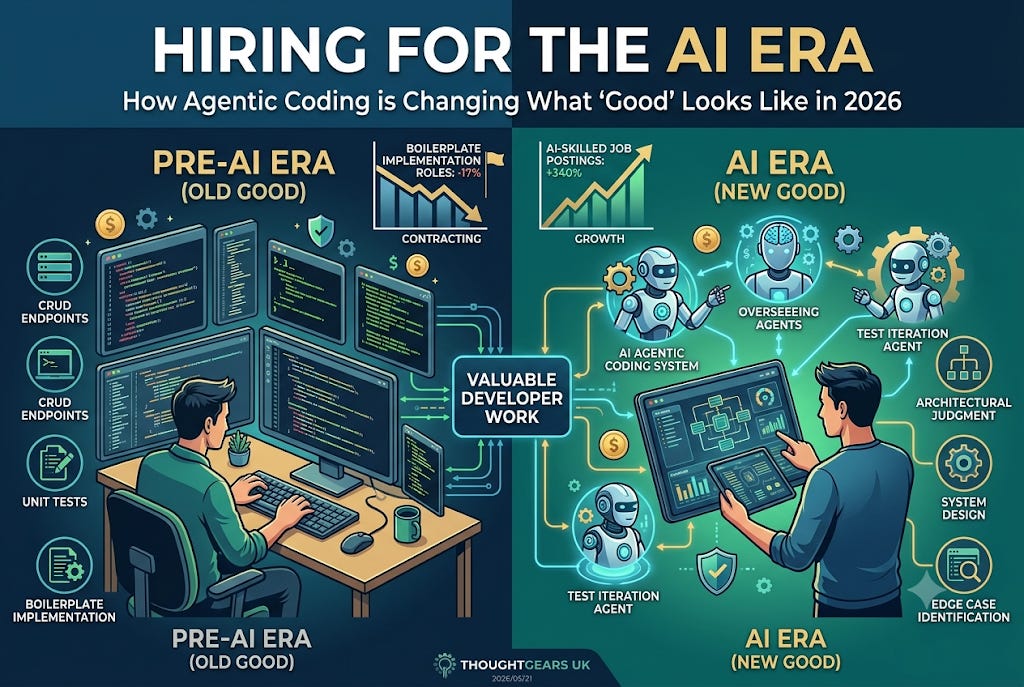
Third, redesign your interview process to test for AI fluency and modern toolchain familiarity. The 71% Microsoft figure isn’t a fad — it’s a permanent shift in what makes a developer valuable.
Fourth, build a 12-month pipeline rather than reacting to attrition. Workforce analytics from project backlog data can forecast skill needs three to six months in advance.
The companies that close the digital skills gap will be the ones that treat talent as a strategic asset, not a quarterly fire to put out.
The UK tech talent shortage is no longer an abstract risk. It is a measurable, multi-billion-pound drag on growth that affects every company trying to ship software, scale a digital product, or modernise legacy systems. The £4.4 billion the UK lost in 2023 and the £27.6 billion at stake by 2030 should focus the mind of every founder, CTO, and HR director.
But the data also points to a way through. Hybrid teams that combine senior UK leadership with skilled offshore engineers from South-East Asia and Europe can deliver high-quality output at sustainable rates. Skills-based hiring widens your pipeline. Specialist staff augmentation partners accelerate time-to-hire. Workforce planning replaces reactive scrambling.
The leaders winning in 2026 aren’t the ones with the biggest UK hiring budget. They’re the ones building globally, recruiting on capability, and partnering with people who can deliver talent at speed.
Ready to scale your tech team? Get in touch with ThoughtGears — we’d love to hear about your project.
FAQs
What is the current cost of the UK tech skills shortage?
The University of Birmingham estimates the digital skills shortage cost the UK £4.4 billion in 2023, with that figure projected to reach £27.6 billion by 2030 if left unaddressed.
Which tech roles are hardest to fill in the UK in 2026?
AI and machine learning engineers, cybersecurity specialists, cloud architects, and senior data engineers.
How does IT staff augmentation help with the talent shortage?
IT staff augmentation lets you bring in pre-vetted specialist engineers within days rather than months, fill specific skill gaps without long-term commitments, and scale up or down based on project needs.
Is hiring offshore developers a reliable solution?
Yes, when done with the right partner. Skilled offshore developers from regions like Southeast Asia and Eastern Europe deliver high-quality work at 35–60% lower rates than UK equivalents.
How long does it take to fill a senior tech role in the UK today?
Industry data shows the average time to fill a specialist technical role is around 88 days. A staff augmentation partner can often deliver within 14–30 days.
What is skills-based hiring, and how does it help?
Skills-based hiring evaluates candidates on demonstrated capability — coding tests, project portfolios, technical assessments — rather than degrees or past job titles.
How do I start using offshore tech talent without sacrificing quality?
Start with a single, well-defined project or role. Partner with a specialist offshore tech recruitment provider who handles vetting, contracts, and compliance.
What are the main drivers of the cost of skills shortage UK businesses face?
Inflated salaries from supply-demand imbalance, longer time-to-hire dragging out projects, lost revenue from delayed product launches, and reduced ability to adopt emerging technologies.
Will AI tools reduce the demand for software developers?
The opposite is happening. AI tools are creating more developer work, not less, by lowering the cost of building software and increasing demand for it.
What’s the first thing a CTO should do about the talent shortage?
Audit your open roles and split them into onshore-essential versus offshore-suitable. Then engage a specialist tech recruitment partner who can deliver pre-vetted candidates within 30 days.
⚠️ Disclaimer
This article is for general information only. Statistics referenced are from public sources current at the time of writing. ThoughtGears is not a legal, tax, or financial adviser. Always seek qualified professional advice for your specific situation before making hiring, investment, or compliance decisions.