From Cost Centre to Competitive Edge: How to Reframe Your Global Tech Team to the Board

Most UK CTOs I speak to describe the same uncomfortable moment. They sit in a quarterly board meeting, slide the tech budget across the table, and watch the conversation collapse into one question: “Can we cut it?”
It’s the wrong question. And the way the team is presented is part of the reason it gets asked.
When a global engineering team — whether based in Vietnam, the Philippines, India, or Eastern Europe — gets reduced to a line item under “operational expenditure,” the board sees a number that goes down when you trim it. They don’t see release velocity, time-to-market, retained customers, or the entire product roadmap that depends on those engineers turning up on Monday.
This isn’t a board failure. It’s a framing failure. And founders and CTOs own it.
In 2026, with AI reshaping software development, regulatory pressure rising, and the UK digital skills gap projected to cost the economy £27.6bn by 2030, your global tech team isn’t a cost centre at all. It’s a strategic moat. The question is whether your board sees it that way — and that depends entirely on how you tell the story.
Why “cost centre” is the wrong frame in 2026
The cost-centre frame made sense fifteen years ago, when offshore meant “cheaper bodies in seats.” That’s not what global tech teams are anymore.
According to Global Growth Insights, 74% of enterprises now use staff augmentation as a core delivery model — not as a budget hack. The global IT staff augmentation market has grown from $299.3bn in 2023 to a projected $857.2bn by 2032, a 13.2% CAGR. Companies aren’t piling into this market because it’s cheap. They’re piling in because they cannot otherwise build what they need to build.
Three things have changed:
The talent simply isn’t available locally. ManpowerGroup found 75% of UK IT firms cannot find qualified candidates, and the average time-to-hire for specialist roles has stretched to 88 days. A cost-centre framing assumes interchangeability. There is no interchangeability when the talent doesn’t exist on your doorstep.
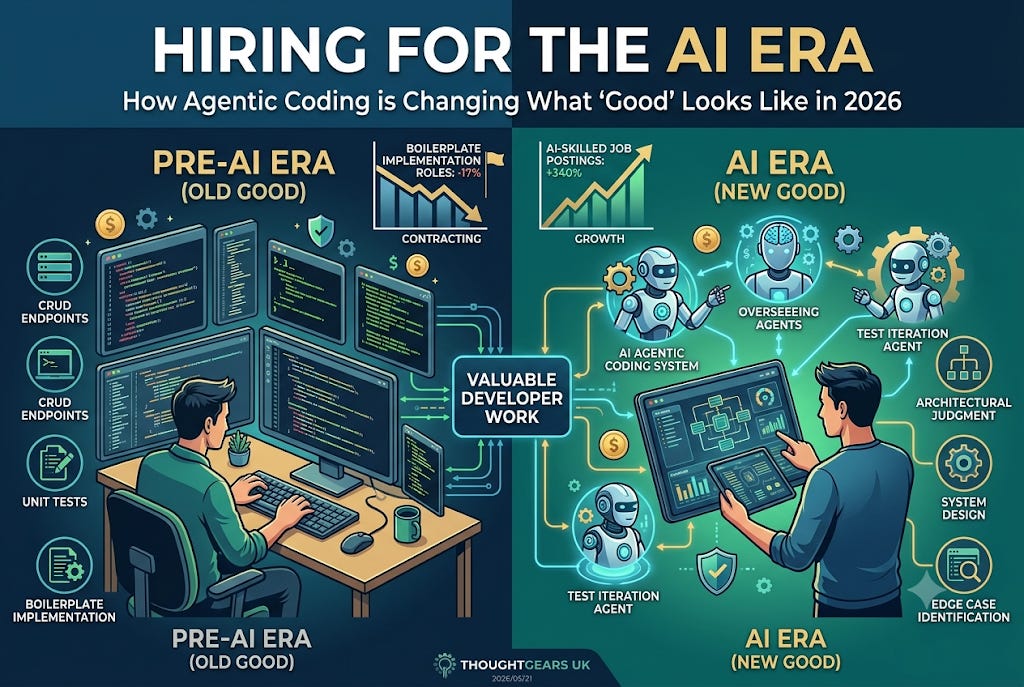
AI has reshaped the value of specialist engineers. Senior engineers using AI tooling now produce dramatically more than they did two years ago. A small, well-equipped offshore team can outproduce a much larger conventional one. That’s not a cost story — it’s a leverage story.
The boards your competitors report to are already past this. They’re discussing tech as a growth engine. If you’re still defending headcount, you’re losing the strategic conversation before it begins.
Translate engineering into business outcomes
Boards don’t think in story points. They think in revenue, risk, and runway. If your team’s contribution is reported in engineering language, you’ve lost the room.
Translate everything.
Instead of “We shipped 47 PRs this quarter,” try: “We released the new onboarding flow six weeks ahead of schedule, which moved trial-to-paid conversion from 14% to 19% — that’s roughly £340,000 of additional ARR this year alone.”
Instead of “Our offshore team handles the data platform,” try: “Our Vietnam team owns the data infrastructure that runs our pricing engine. Without it, we couldn’t run dynamic pricing experiments — and dynamic pricing has added 7% to gross margin since January.”
Every quarter, ask one question of every major workstream: what business outcome did this enable, and what would have happened without it? If you can’t answer, that’s a flag — either the work doesn’t matter, or you haven’t connected it to anything the board cares about. Both are fixable.
Show the board what you’d be losing without it
Boards understand opportunity cost when you make it concrete.
Run a simple counterfactual once a year. What would it cost — in time, money, and risk — to replace your global team with UK-only headcount?
The maths is sobering. A senior UK engineer typically costs £75–£120 per hour fully loaded. A senior Vietnamese or Philippine engineer working through an established staff augmentation partner runs $25–$50 per hour. But the cost isn’t even the main story. The 88-day time-to-hire is. The 6–9 month ramp-up to productivity is. The fact that, per Gartner, 64% of leaders already name the talent shortage as the top barrier to emerging tech adoption is.
Present this to the board as: “To replace our global team locally, we’d need to hire 14 senior engineers in a market where 75% of firms can’t fill their roles, accept an 88-day average time-to-hire, and absorb roughly £1.4m in additional annual cost — assuming we could even find them. We can’t.”
That isn’t defensive. It’s strategic clarity. It moves the team from “expense to optimise” to “capability we cannot reproduce locally.”
Make AI, governance and risk part of the story
Boards in 2026 are asking three questions about technology that they weren’t asking two years ago, and your global team is central to all three.
AI capacity. Where is your team on AI adoption? How are engineers using tools like Claude Code, GitHub Copilot, and Cursor? What’s your productivity baseline, and how is it shifting? Boards want to know you have a coherent answer — not because they want a demo, but because they want assurance the company isn’t being out-leveraged by competitors.
Governance and compliance. With the EU AI Act fully effective from August 2026 and UK regulatory frameworks tightening, boards now ask about AI governance, model usage policies, and supply-chain risk. Your global team’s location, contractual structure, and data-handling practices are board-level concerns. If your offshore partner can answer these clearly, that’s a competitive asset.
Continuity and concentration risk. A well-structured global team — multiple geographies, clear documentation, async-first practices — is more resilient than a single in-house team in one office. Frame it that way.
When you bring AI, governance and risk into the conversation, the team stops sounding like a budget item and starts sounding like a piece of strategic infrastructure.
Build a quarterly board narrative that compounds
The single biggest shift I’d encourage any UK CTO or founder to make is this: stop treating the board update as a one-off performance and start treating it as a narrative that compounds quarter over quarter.
Pick three or four metrics that genuinely capture strategic value, and report them every single quarter. The same metrics. Without fail.
Examples that work:
Time from idea to production for new features
Revenue or margin impact of shipped work (not all of it — the top 3 items)
AI leverage ratio — output per engineer compared with a year ago
Strategic optionality — capabilities you can now build that you couldn’t last year
Over four quarters, the board sees a trajectory. They start asking better questions. They stop asking whether to cut, and start asking how much faster they could go if they invested more.
That shift — from defensive to growth-oriented — is the entire point.
Conclusion
Reframing your global tech team isn’t a comms exercise. It’s a leadership one. It requires you, as founder or CTO, to take ownership of how technology shows up in the board narrative — and to stop letting it default to a number on a spreadsheet.
The teams I’ve watched do this well share one thing: their leaders treat board reporting as a strategic responsibility, not an administrative one. They invest in the story. They make it compound. And the result is that, when the inevitable cost-cutting conversation comes, the board doesn’t reach for the engineering line — because they’ve already understood, quarter after quarter, that it’s the line that compounds everything else.
Ready to scale your tech team? Get in touch with ThoughtGears — we’d love to hear about your project.
FAQs
1. How often should I update the board on the tech team’s strategic value?
Every quarter, with consistent metrics. One-off “wins” decks don’t build narrative — repeated reporting on the same strategic indicators does.
2. What if my board genuinely just wants to cut costs?
Then your job is to give them a clearer cost picture — including the cost of not having the team. Counterfactual analysis is more persuasive than defensiveness.
3. Should I bring my offshore team lead into board meetings?
Occasionally, yes. A 15-minute appearance from a senior engineer based in Vietnam or the Philippines humanises the team and demonstrates the calibre of talent. It’s also a quiet rebuttal to the “cheap labour” frame.
4. How do I quantify “strategic optionality”?
List the capabilities you can now build that you couldn’t 12 months ago, and tie at least one to a revenue opportunity. That’s optionality made concrete.
5. What’s the right ratio of UK to offshore headcount for board credibility?
There’s no universal answer. What matters is that the structure is intentional and you can articulate why. A board doesn’t need a formula — they need to see strategic logic.
6. How should I talk about AI productivity gains without overclaiming?
Use your own data, not vendor benchmarks. Track output and cycle times before and after AI tool rollout, and report what your team experiences. Boards trust internal evidence.
7. What about governance and EU AI Act exposure for offshore teams?
Treat it as a positive: a well-structured offshore partner with clear data-handling and AI usage policies reduces governance risk relative to ad hoc contractor arrangements.
8. How do I handle a board member who’s openly sceptical of offshore?
Take them seriously, get specific about their concern (cost, quality, security, IP, communication), and address that one concern with evidence. Vague reassurance never works.
9. Is this advice different for VC-backed companies vs bootstrapped?
The framing is the same; the metrics shift slightly. VC-backed boards care more about velocity and optionality, bootstrapped boards more about margin and runway. Tailor accordingly.
10. What’s the single biggest mistake CTOs make in board reporting?
Reporting in engineering units instead of business units. Story points, sprint counts, and ticket throughput don’t translate. Revenue, margin, customer outcomes, and strategic capability do.
⚠️ Disclaimer
This article is published by ThoughtGears for general information and educational purposes only. ThoughtGears is an IT staff augmentation business and is not a legal, financial, tax, or regulatory adviser. Nothing in this article should be relied upon as legal, financial, tax, employment, or regulatory advice. Readers should always consult appropriately qualified professionals before making decisions about their business, contracts, hiring practices, AI governance, or board reporting. Statistics referenced are drawn from publicly available sources at time of writing and may evolve.